Commercial Roof Repair
Leak tracing and repairs on membrane, metal, and built-up roofs, with a clear line on when patching stops and replacement planning starts.
Commercial roof repair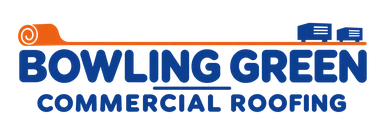
We provide commercial roofing services in Bowling Green: leak repair, TPO, EPDM, and flat roof replacement, industrial reroofing, and metal roof work, each starting with a roof walk.
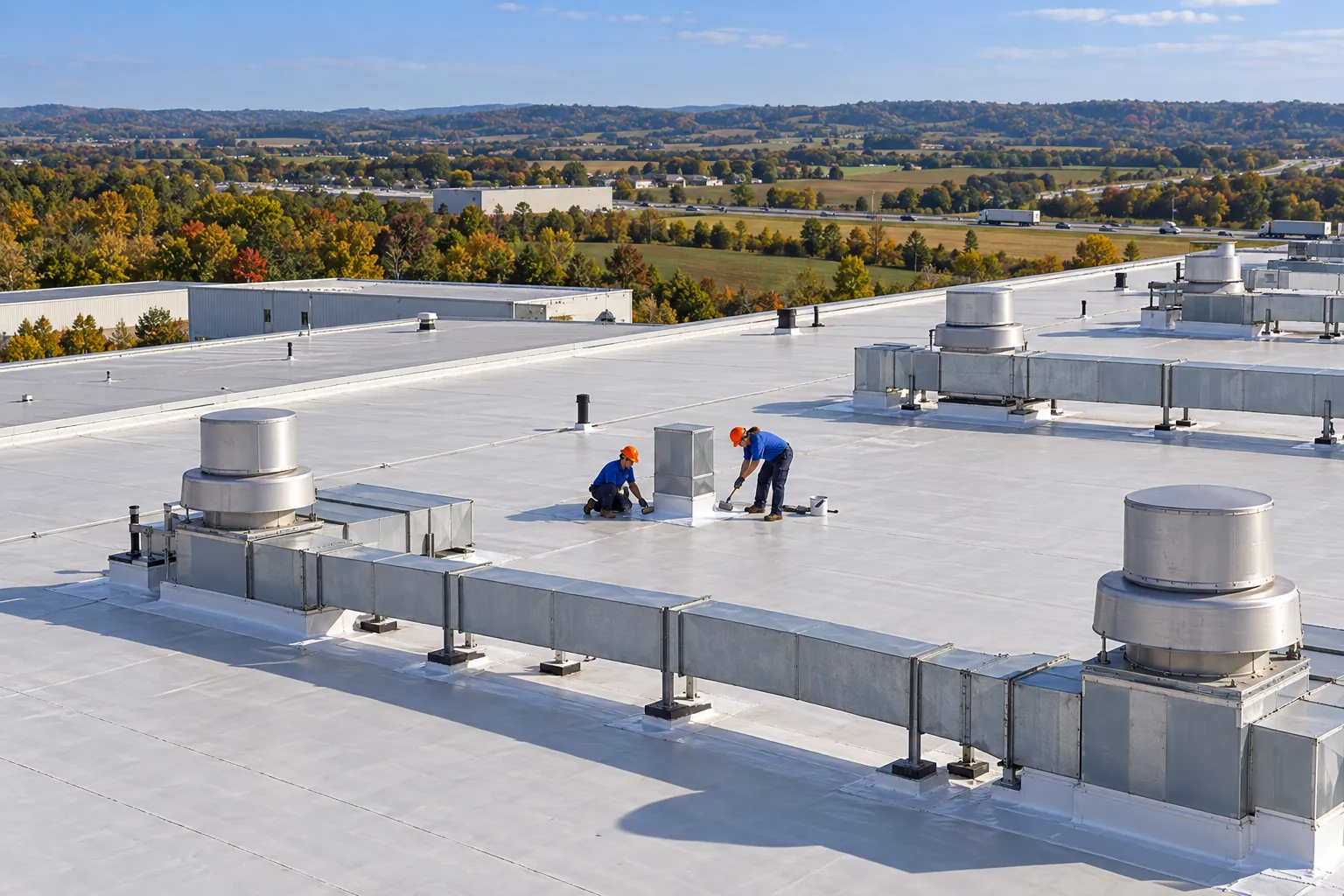
These commercial roofing services in Bowling Green cover the roof systems on most plants, warehouses, offices, and shops. Each card says where the work fits.
Leak tracing and repairs on membrane, metal, and built-up roofs, with a clear line on when patching stops and replacement planning starts.
Commercial roof repairHeat-welded white membrane for warehouses, retail, and offices, fastened, adhered, or ballasted to suit the deck and wind exposure.
TPO roofingRubber membrane with taped seams for wide flat roofs, older buildings, and recovers over one dry existing layer.
EPDM roofingTear-off or recover of built-up, modified bitumen, and single-ply roofs, with tapered insulation that moves water to drains.
Flat roofingPlant and mill roofs reroofed in dried-in sections, with membranes matched to exhaust and walkways for service traffic.
Industrial roofingStanding seam and R-panel installs, retrofits over flat roofs, and fastener, lap, and panel repairs on existing steel.
Commercial metal roofingThe building and its rooftop loads point toward a system before the inspection settles it. Find the row closest to your roof.
| If The Building Is | TPO | EPDM | Metal Panels |
|---|---|---|---|
| A large warehouse with heavy rooftop units and long cooling hours | Usually Fits | Sometimes | Rarely |
| A wide, plain flat roof on an older school or office | Sometimes | Usually Fits | Rarely |
| A restaurant or plant with exhaust putting grease on the roof | Sometimes | Rarely | Rarely |
| A pre-engineered shop, barn, or storage building | Rarely | Rarely | Usually Fits |
| A flat roof that ponds on a structure able to carry framing | Sometimes | Sometimes | Usually Fits |
| A heated shop with little cooling and winter work ahead | Sometimes | Usually Fits | Sometimes |
PVC, left off this chart, resists grease and oils best and is the usual pick near exhaust fans.
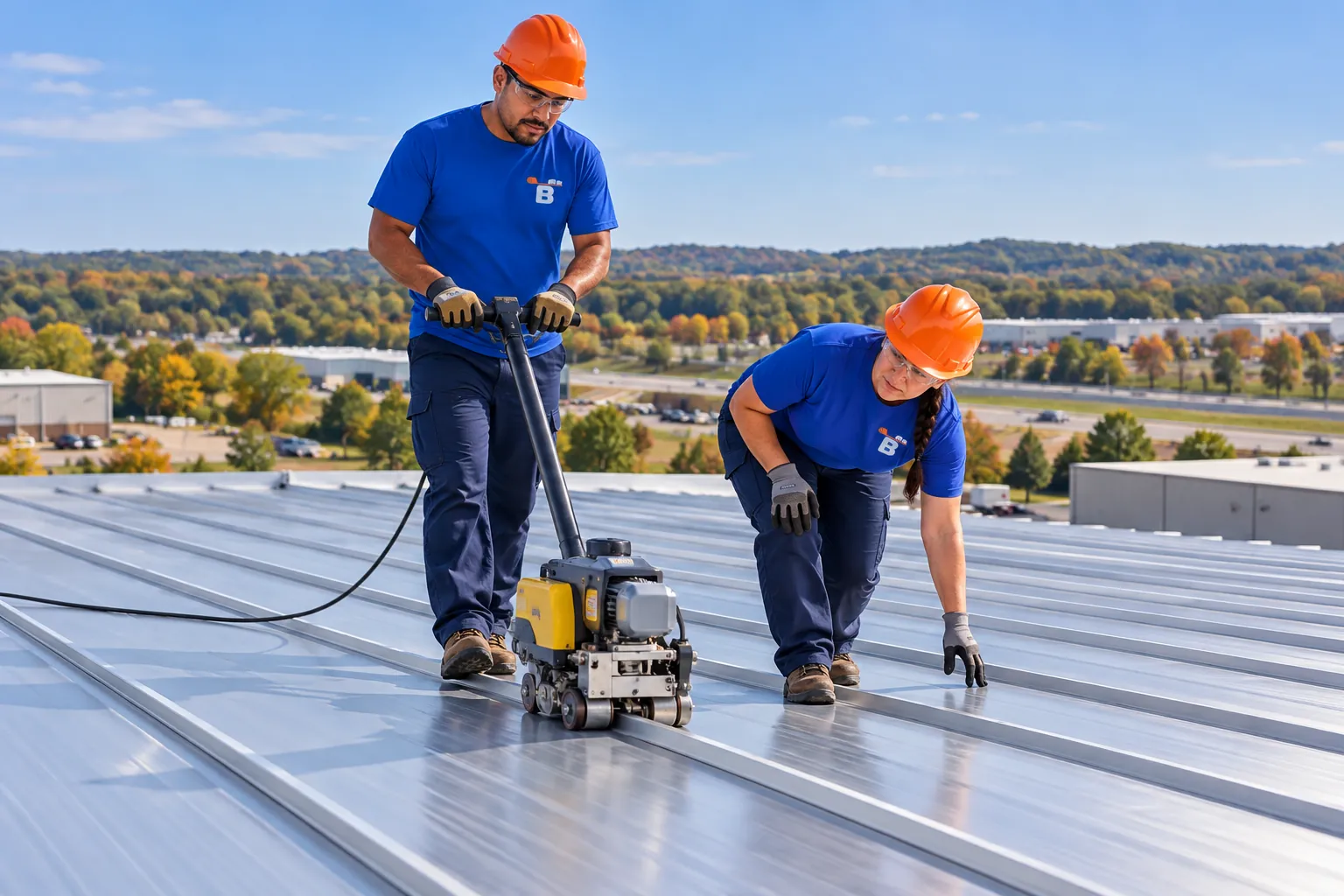
Get a free estimate and a roof walk. Core cuts and a moisture survey settle repair, recover, or replacement before any system is chosen.
A full replacement follows five steps, from cores to the final walk. Repairs and recovers use the parts they need.
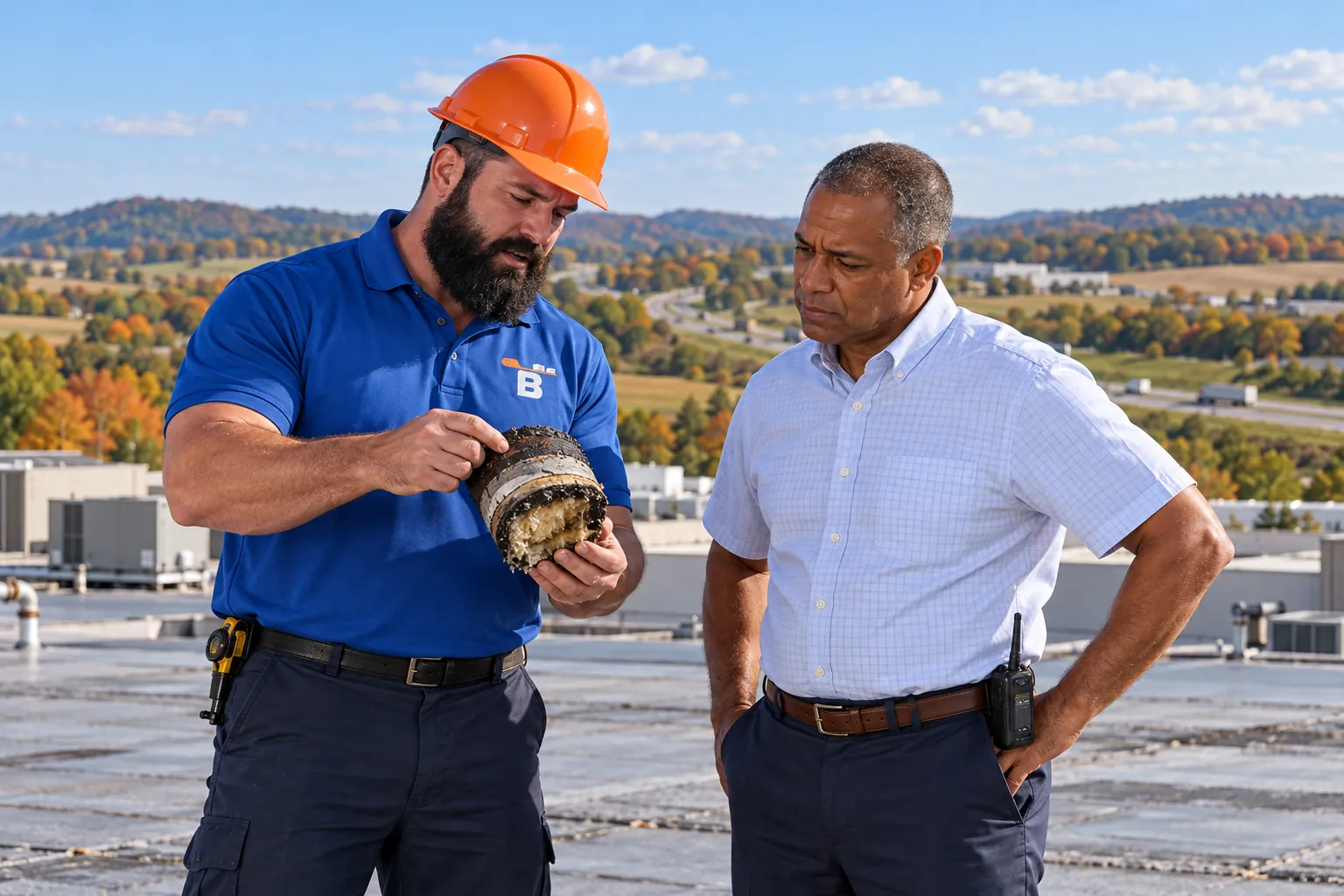
We walk the whole roof, cut cores to count layers and check insulation, scan for wet areas, and look at seams, flashing heights, drains, and the deck from inside.
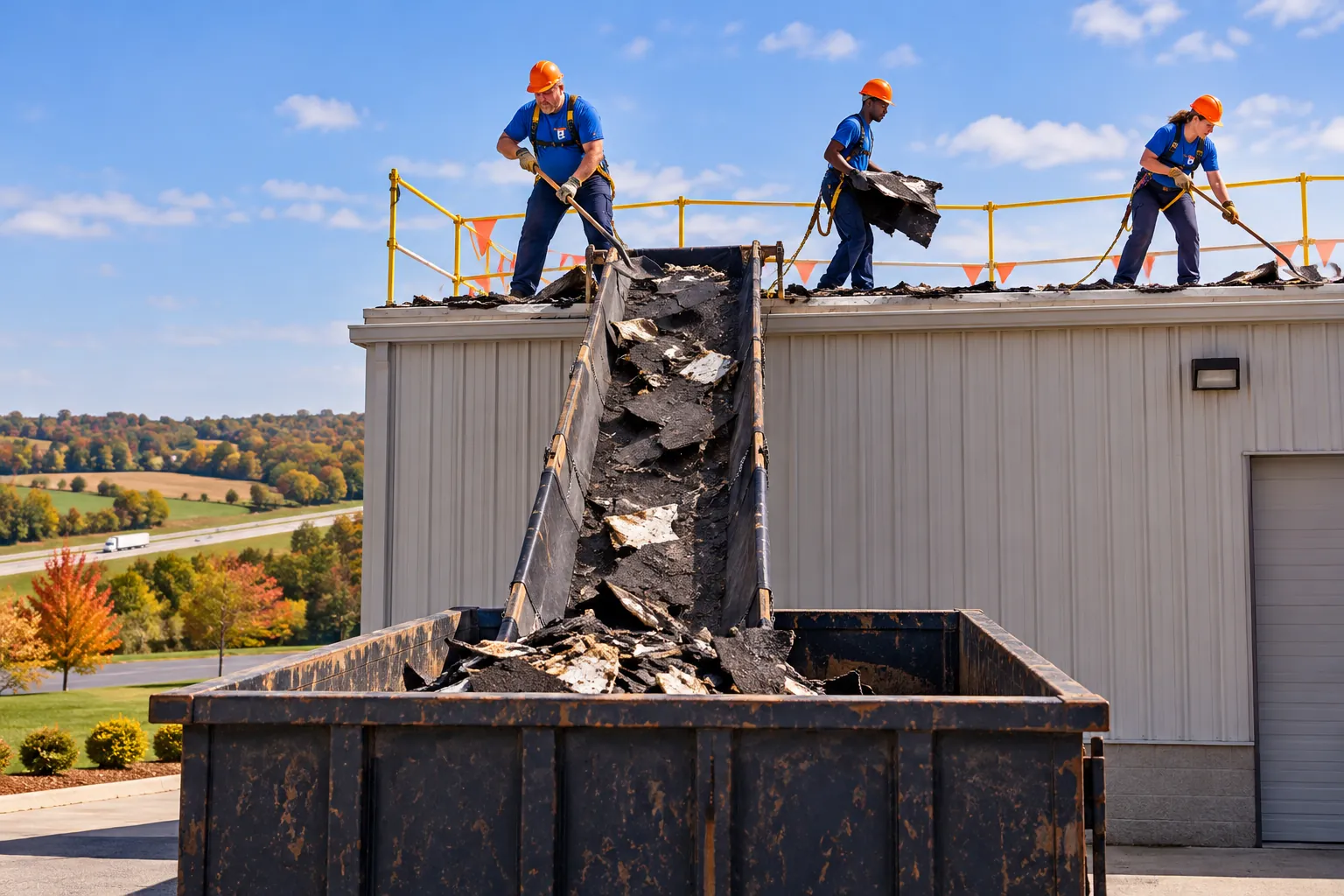
A dry roof with one layer and a firm deck can take a recover. Wet insulation over a large share of the roof, or two existing layers, points to tear-off.
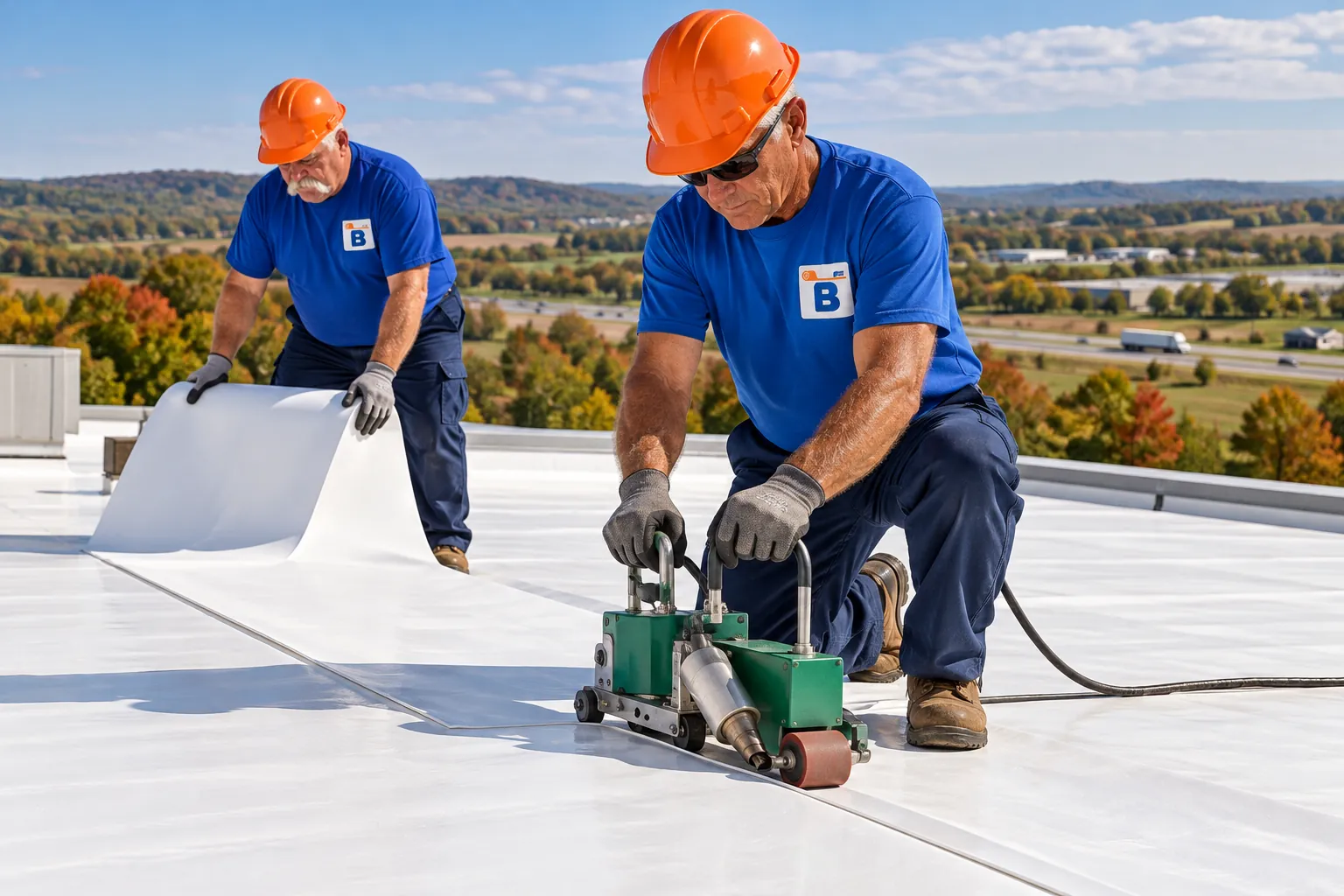
Each section comes off to the deck, wet boards are cut out, and rusted steel deck is cleaned and treated or replaced before new work goes on.
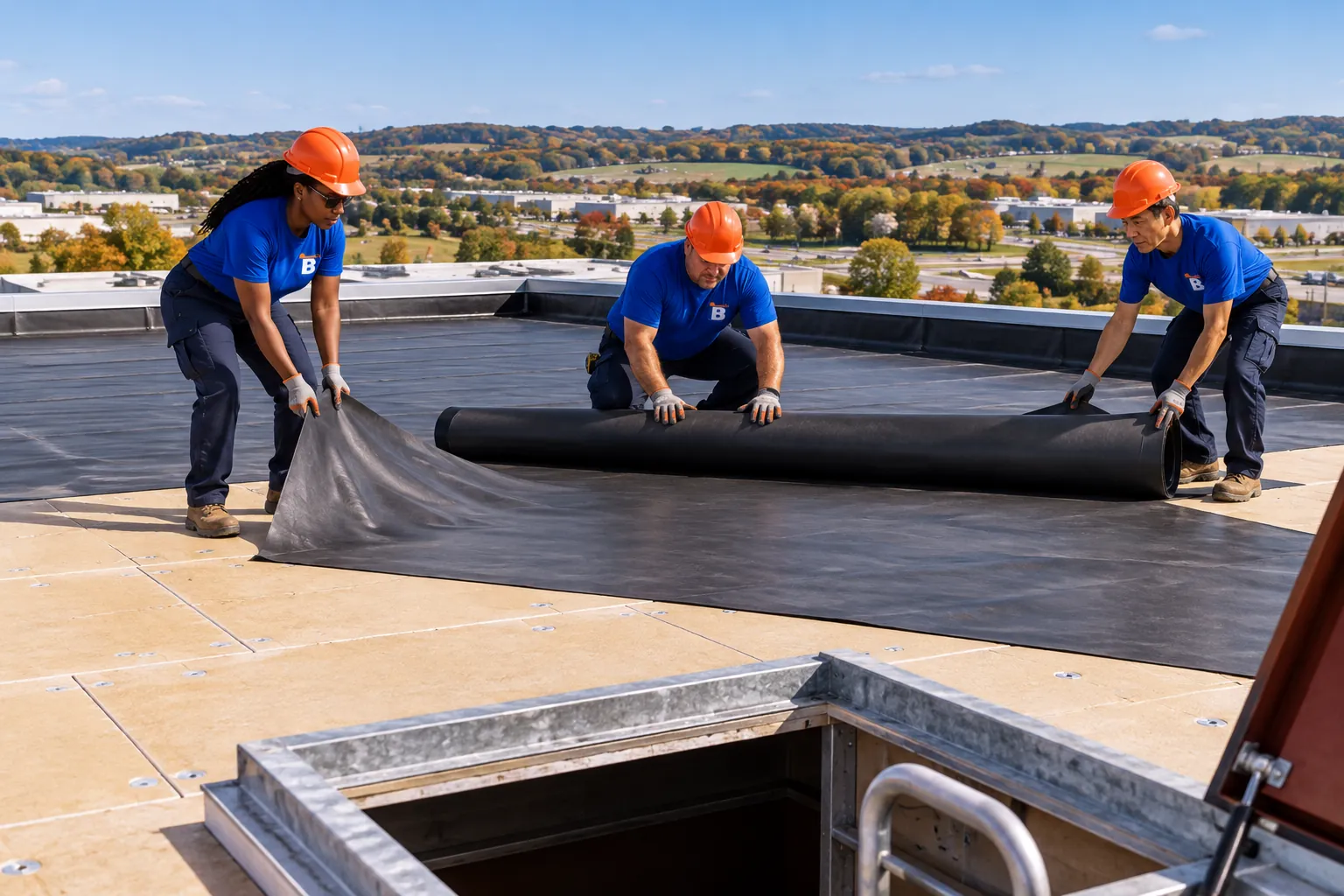
Insulation goes back at the 2012 IECC thickness, cover board follows, and the membrane or metal system goes on with flashing at every curb and wall.
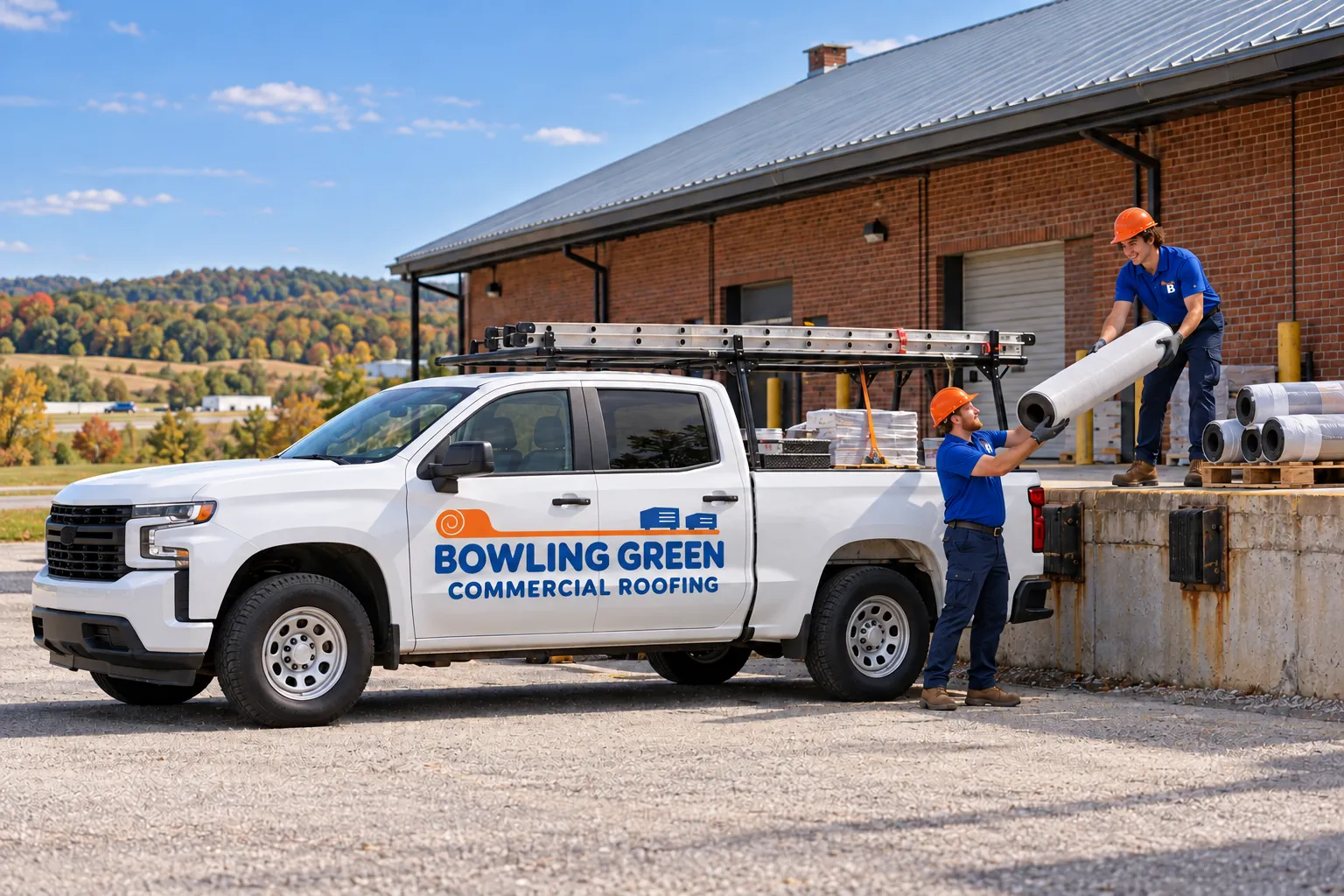
New edge metal, coping, and gutters go on at the new height, scuppers get sleeves, and the finished roof is walked with you.
The membrane or panels have failed across the roof, insulation is wet in large areas, or repairs keep chasing new leaks.
Look for membrane shrinking from parapets, seams opening in many places, widespread blisters, and soft spots underfoot. On metal, rust-through on many panels and sagging purlins point the same way. A moisture survey sizes the wet area.
Tear-off removes the roof to the deck and shows the whole deck, while a recover goes over the existing roof after core cuts. A recover suits a dry roof with one existing layer and a firm deck, adds weight, raises edges and curbs, and makes less debris and noise. The building official confirms layer limits.
It gets cut out and replaced, since it has lost much of its insulating value and holds moisture against the deck.
Wet areas from the moisture survey are confirmed with core cuts as tear-off reaches them. The deck is checked for rust or rot and repaired, and new boards go back at the full assembly thickness.
A full replacement often brings in Kentucky's commercial energy code, the 2012 IECC, which sets minimum roof insulation for the climate zone. Ask the building official how it treats a recover or partial replacement. More insulation raises the roof edge, so fascia, coping, curbs, door thresholds, and scuppers need checking against the new height.
Usually, since edge metal, coping, and gutters fasten through or over the old roof and need to match the new height. Perimeter metal holds the membrane edge against wind, so it is fastened at its listed spacing. Coping gets new cleats and sealed joints, gutters are resized for new drainage, and scuppers get new sleeves.
Single-ply membranes and metal panels cover most commercial and industrial roofs in south central Kentucky. TPO roofing in Bowling Green shows up on warehouses and retail, EPDM on older flat roofs, schools, and offices, PVC near exhaust, and metal on pre-engineered buildings. Older buildings still carry built-up and modified bitumen, and many combine two systems.
From the bottom: a steel, concrete, or wood deck; a vapor retarder where indoor humidity calls for one; insulation boards, often tapered polyiso; a cover board against foot traffic and hail; the membrane; and flashing and edge metal at curbs, walls, and the perimeter.
Trouble in one layer shows in another, such as wet insulation softening the sheet above it.
Each system follows how it is attached, seamed, and flashed. TPO labor centers on seam welding, plate rows, and curb flashing; EPDM on lap prep, taping, and corners; standing seam on panel forming, clips, and trim; R-panel on screw count, lap sealing, and closures.
Tear-off, wet insulation, and insulation thickness move the price on any system.
Tell us about the building and the roof it has now. We inspect it and lay out repair, recover, or replacement in plain terms.
Want Us To Call You About Your Roof?
Leave a name and number. Prefer to talk now? Call (364) 205-6781.